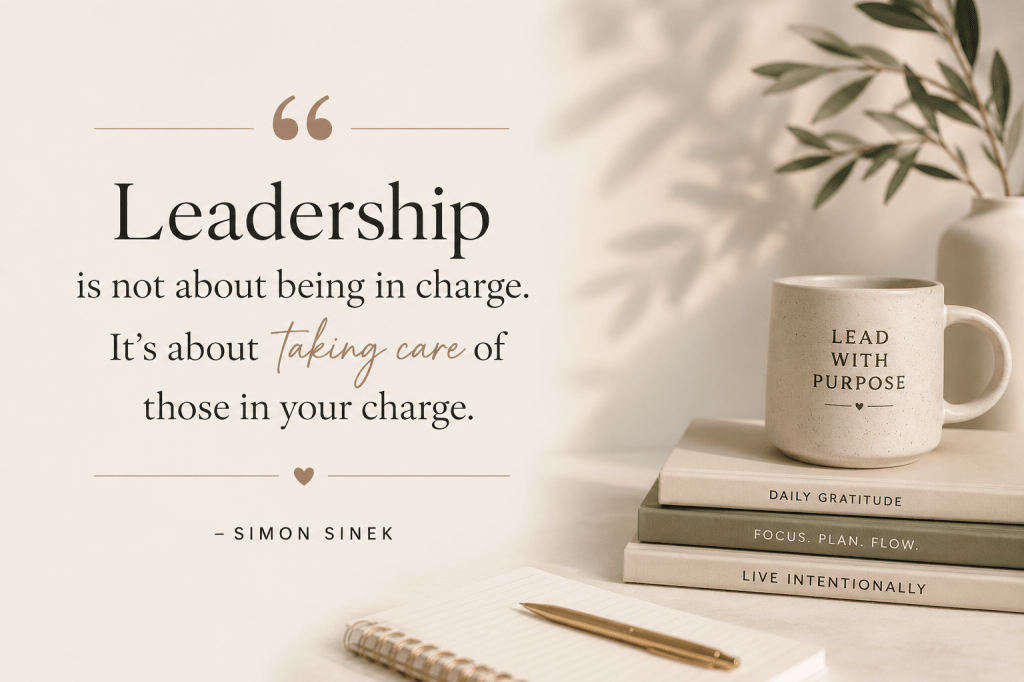
For the women leading meetings, managing households, carrying the mental load, and still trying to make space for themselves — this is for you.
There’s a version of leadership most of us were taught to recognize — titles, meetings, presentations, managing teams, and performance reviews. But some of the strongest leadership skills are the ones we use quietly every single day in our personal lives.
Leadership is not just a workplace skill.
It’s a life skill.
And the reality is, many of the skills that help us succeed professionally are the exact same skills helping us navigate relationships, parenting, marriage, friendships, stress, and everyday responsibilities at home.
For me personally, communication and emotional intelligence are two of the biggest skills I use both at work and in my personal life.
At work, communication helps me:
- collaborate with others
- manage expectations
- navigate conflict professionally
- explain ideas clearly
- build trust within teams
At home, those same communication skills show up differently — but they matter just as much.
Communication at home can look like:
- explaining feelings instead of reacting emotionally
- having hard conversations with empathy
- asking for help instead of carrying everything silently
- listening to understand, not just respond
- creating healthy boundaries with family, friends, or partners
The environment changes, but the skill itself stays the same.
Emotional Intelligence Is a Real-Life Superpower
Emotional intelligence is often described as a “soft skill,” but honestly, there is nothing soft about managing emotions in high-stress situations.
At work, emotional intelligence helps us:
- stay professional under pressure
- read the room during conversations
- respond thoughtfully instead of reacting impulsively
- lead teams effectively
- adapt to different personalities and communication styles
But emotional intelligence becomes even more important at home.
At home, emotional intelligence can look like:
- recognizing when you’re overwhelmed before burnout hits
- staying calm during difficult parenting moments
- handling disagreements without escalating them
- teaching children emotional regulation by modeling it yourself
- giving yourself grace during stressful seasons
A lot of us grew up learning how to be productive, but not necessarily how to process emotions in a healthy way. Learning emotional intelligence as an adult changes not only how we work, but how we live.
The Skills Transfer Into Everyday Life More Than We Realize
Think about how many workplace skills actually support everyday life:
| Workplace Skill | Real-Life Application |
|---|---|
| Time management | Managing schedules, routines, appointments |
| Conflict resolution | Navigating relationships and family disagreements |
| Organization | Reducing mental load and household stress |
| Adaptability | Handling unexpected life changes |
| Leadership | Creating stability for yourself and others |
| Problem solving | Managing finances, parenting, and daily challenges |
| Boundary setting | Protecting your energy and mental health |
These are not just “career skills.”
They are human skills.
Leadership Doesn’t End After Work
One thing I’ve realized is that leadership at home often goes unseen because there’s no promotion attached to it. No performance review. No recognition email. But it still matters deeply.
Leadership can look like:
- creating routines that make life easier for your family
- staying emotionally present even when you’re tired
- breaking unhealthy cycles
- communicating calmly during stressful moments
- teaching your children resilience and emotional awareness
- building systems that support your peace instead of constant chaos
Sometimes leadership is not about doing more.
Sometimes it’s about learning how to live better.
Tools That Help Support Real-Life Leadership
A few practical tools that support both work and home life:
- Google Calendar for shared scheduling and routines
- Google Keep for quick reminders and mental load management
- Trello for organizing projects, routines, or household tasks
- Canva for planning visuals, schedules, or family systems
- Notion for life organization, journaling, and planning
The goal isn’t perfection.
The goal is creating systems, habits, and skills that help life feel more manageable and aligned with the kind of life you actually want to live.
Because leadership is not only about how you perform professionally.
It’s also about how you communicate, care for yourself, support others, manage challenges, and move through everyday life with intention.
 TheCareerMomCollective.blog